Published: 23 Jun 2011
The bees living on the roof of the European
Environment Agency (EEA) received some special
guests today, when European Environment
Commissioner Janez Potocnik and Danish Environment
Minister Karen Ellemann visited their hives.
The two policy makers joined EEA Executive
Director Jacqueline McGlade in harvesting
the first batch of honey.
Professor McGlade said: “Keeping bees on
our roof provides an excellent opportunity
for the EEA to get hands-on experience of
caring for the productive systems of our
planet. Environmental projects like this
show how social and environmental benefits
often go hand-in-hand. Hopefully our positive
experience can inspire other cities across
Europe to start similar projects.”
Bees are a prime example of an undervalued
service that nature delivers to human society.
Together with other species (mostly insects
but also bats and birds) bees play a key
role as pollinators – enabling reproduction
of plants, wild and domesticated. One attempt
to price this service estimates the contribution
of insect pollinators to agricultural output
may be worth up to US$ 190 billion per year.
Since the introduction of modern agricultural
methods, new diseases and other environmental
changes, bees have been in decline across
Europe. These reasons are not fully understood
and research is ongoing.
However, there is some good news - urban
beekeeping is increasing. Copenhagen is
one of the most recent cities to embrace
beekeeping, following Paris, Berlin and
Hong Kong. The bees can find plenty of pollen
in the parks and gardens of cities, and
the honey is generally of a very high quality.
In addition, urban beekeeping can raise
awareness of the importance of pollinators
and contributes to urban biodiversity.
Commissioner Potocnik added: "We take
bees for granted, and the same goes for
many other ecosystem services – the soil,
air and water that nature provides for free.
But we should take more care. Bees are signal
species and when we fail to respect their
lifestyle, they may no longer be able to
help support ours. In the Environment Council
this week, we discussed the new Biodiversity
Strategy for Europe, setting out objectives
and targets towards 2020. I sincerely hope
that we can convince enough people that
everyone needs to be part of protecting
biodiversity, and that is why initiatives
like this one – bringing nature to city
centres – are so useful."
Danish Minister of the Environment Karen
Ellemann said: “My aim is to actively engage
Danes in preserving all of our species.
The annual value of pollination from Danish
honey bees is estimated at one billion dollars,
so it is therefore significant that 3.5
million bees are now being kept in Copenhagen.
Urban beekeeping can raise people’s awareness
of the importance of pollinators and contribute
to the crucial protection of biodiversity.”
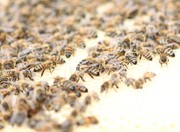
The EEA has been keeping bees on its roof
since April 2011. The two hives sit on the
roof of the five-storey building in central
Copenhagen, and during the summer are home
to approximately 80,000 bees. These hives
will provide an estimated 100kgs of honey
per year. The hives are managed by the Bybi
(Danish for ‘City Bee’) social enterprise,
which trains formerly homeless people in
beekeeping.
Biodiversity is also one of the aims of
the UN International Year of Forests. To
mark this event in 2011, the EEA has also
given over its courtyard to an artistic
installation representing a forest, featuring
living birch trees.
Commissioner Potocnik was visiting the EEA
to discuss further collaboration between
the EEA and the Commission.